


Whitwick St John the Baptist
Church of England Primary School
Latest News
Growing Together: Gardening Club in Bloom
22.04.2026
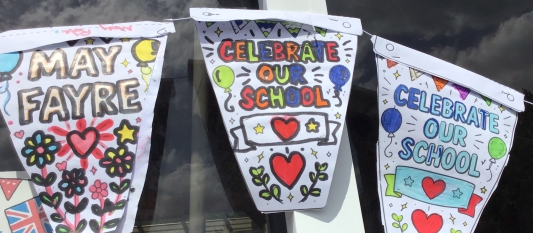
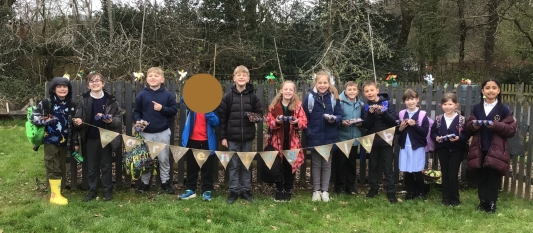
Our Years 3 and 4 Gardening Club is flourishing, with pupils showing enthusiasm,...


Raising our Young Voices!
26.01.2026
Pupils from our school, proudly took part in Young Voices, an incredible childre...

School Partnerships
The Collaborative Partnership Charitable Trust (CPCT)
What is the CPCT?
The partnership was first formed in 2012 by a group of Headteachers who were keen to collaborate with other like-minded schools in a way that had a direct impact on the children. There are currently five schools: All Saints CE Primary School, New Swannington Primary School, Thringstone Primary School, Warren Hills Community Primary School and Whitwick, St John the Baptist CE Primary School. Four out of the five schools are LA maintained. Two out of the five schools are Church schools. All five schools in the partnership are graded 'GOOD' by Ofsted.
In 2022, ‘The Collaborative Partnership’ formed a Charitable Trust to secure the partnership.
What is the purpose of the partnership?
"Working and sharing together, for the good of all in a committed, equal partnership."
Members agree to the following principles:
- Each school maintains its own name and individual autonomy – and therefore distinctive ethos.
- Every school will contribute: offering advice support and challenge.
- There will be an openness and honesty between schools and willingness to share data, self-evaluation and financial information.
- A development plan is written annually and reviewed at the HT / Chairs meetings.
How do the children benefit?
Every year, year group events are organised so that all children from across the partnership come together.
- Teddy Bear Picnic (FS)
- Yew tree trail trip (Yr 1)
- Stem project (Yr 2)
- Vocalease (Yr 3)
- Life Skills Day (Yr 4)
- RE Roadshow (Yr 5)
- Transition Fun day (Yr 6)
Sporting events are organised between the schools. These events are often less competitive than the events organised by NWLSSP. There is also a wider range of sports offered e.g Speed stacking.
There is a Collaborative school council which is made up of Yr 6 councillors from each of the five schools. They meet termly to plan and carry out joint projects.
How does it support teachers?
Teachers meet termly with colleagues from the other schools teaching the same year group. They use this opportunity to moderate teacher assessments and share practice and experiences. It is also a very valuable networking opportunity.
Subject leaders meet regularly to share resources, procedures and experiences.
How does it support Senior Leaders?
There are more formal networking opportunities for Deputy Headteachers; School Business Managers; SENDCos and Assessment leads.
How does it support Headteachers and Chairs?
The Headteachers and chairs of governors meet 6 times a year. In addition, the chairs work together to complete peer to peer review of governance for each school. The headteachers have had joint training on partnerships visits and a cycle of visits is in place. The headteachers share their School Development Plans so that joint projects can be planned to have a direct impact on individual school improvement as well as improving the provision and experience for all pupils across the partnership.
"We are very proud to be a part of the Collaborative Partnership Charitable Trust!" Helen Noon (Headteacher)
The Charnwood and Coalville Primary Partnership (CCPP)
What is the CCPP?
The Charnwood and Coalville Primary Partnership was formed in 2025 when Loughborough Primary Academy Partnership (LPAP) united with the CPCT. Together they created a diverse group of local primary schools committed to improving outcomes for children through collaboration and shared expertise. The fourteen schools within CCPP are: Burton on the Wolds Primary School, Cossington CE Primary School, Hall Orchard CE Primary School, Hathern CE Primary School, Holywell Primary School, Rendell Primary School, Robert Bakewell Primary School, Stonebow Primary School, Quorn, St Bartholomew's CE Primary School, All Saints CE Primary School, New Swannington Primary School, Thringstone Primary School, Warren Hills Community Primary School and Whitwick, St John the Baptist CE Primary School.
What does CCPP do?
A key strength of CCPP is its quality assurance work. Headteachers work collaboratively to review standards across schools, including outcomes in Foundation Stage, KeyStage 1 and Key Stage 2, as well as teaching and learning. This work provides professional challenge and support, leading to shared understanding and improvement. To add further rigour, external educational consultants, including a serving Ofsted inspector, support this quality assurance activity.
The work of the Headteachers is complemented by the School Business Managers' group. Regular meetings provide professional support as schools operate within both maintained and academy finance systems and timelines. The group's first major project has involved several schools working together to secure a new school food and payroll provider demonstrating the practical benefits of collaboration and shared decision-making.
In addition, CCPP supports a range of professional networks, including Foundation Stage and SEND groups. Curriculum development and training are enhanced through membership of the Professional Teaching Institute (PTI), with different subjects supported each term. These opportunities encourage staff at all levels to work together, share good practice and develop expertise for the benefit of children across all fourteen schools.
Why is CCPP effective?
With fourteen schools, CCPP is large enough to offer meaningful collaboration while remaining focused on the needs of children and staff. Strong professional relationships underpin a culture of trust, challenge and support, without becoming either too cosy or bureaucratic. This flexible partnership model has enabled schools to flourish together within a changing educational landscape, ultimately improving outcomes for children across the partnership.
